"We Buy Houses" Scams in NJ & PA — How to Tell a Real Cash Buyer from a Con
"We Buy Houses" Scams in NJ & PA — How to Tell a Real Cash Buyer From a Con
Key takeaways
Most "we buy houses" companies are legitimate — but a few bad actors give the whole category a black eye, so it pays to know the warning signs.
The most common trap isn't an outright scam; it's the bait-and-switch: a high offer to get you under contract, then a "renegotiation" right before closing.
A real cash buyer will prove funds, put everything in writing, explain how they got their number, and never pressure you. If any of those are missing, walk.
You can protect yourself in ten minutes: check reviews and licensing, get more than one offer, and read the contract before you sign.
Let me say something that might sound strange coming from a guy who buys houses for cash: be careful who you sell your house to. I've been doing this in South Jersey for more than 40 years, and I've watched the "we buy houses" business fill up with good, honest local buyers — and a handful of operators who cut corners and leave homeowners worse off. Those few are why the whole category gets side-eye. So rather than pretend it doesn't happen, let me show you exactly how to tell the difference, the same way I'd tell a neighbor.
First, the honest truth: most cash buyers are legitimate
The "we buy houses" model exists because the traditional market genuinely doesn't work for everyone. If you're facing foreclosure, sorting out an inherited house, or holding a property that needs more work than it's worth, a fair cash sale can be the cleanest way out. That's a real service, and most of the people offering it do right by their sellers.
But like any business where money moves fast and people are under stress, it attracts a few who shouldn't be in it. The good news is that the bad actors tend to behave in predictable ways — once you know the pattern, they're easy to spot.
The red flags that should make you pause
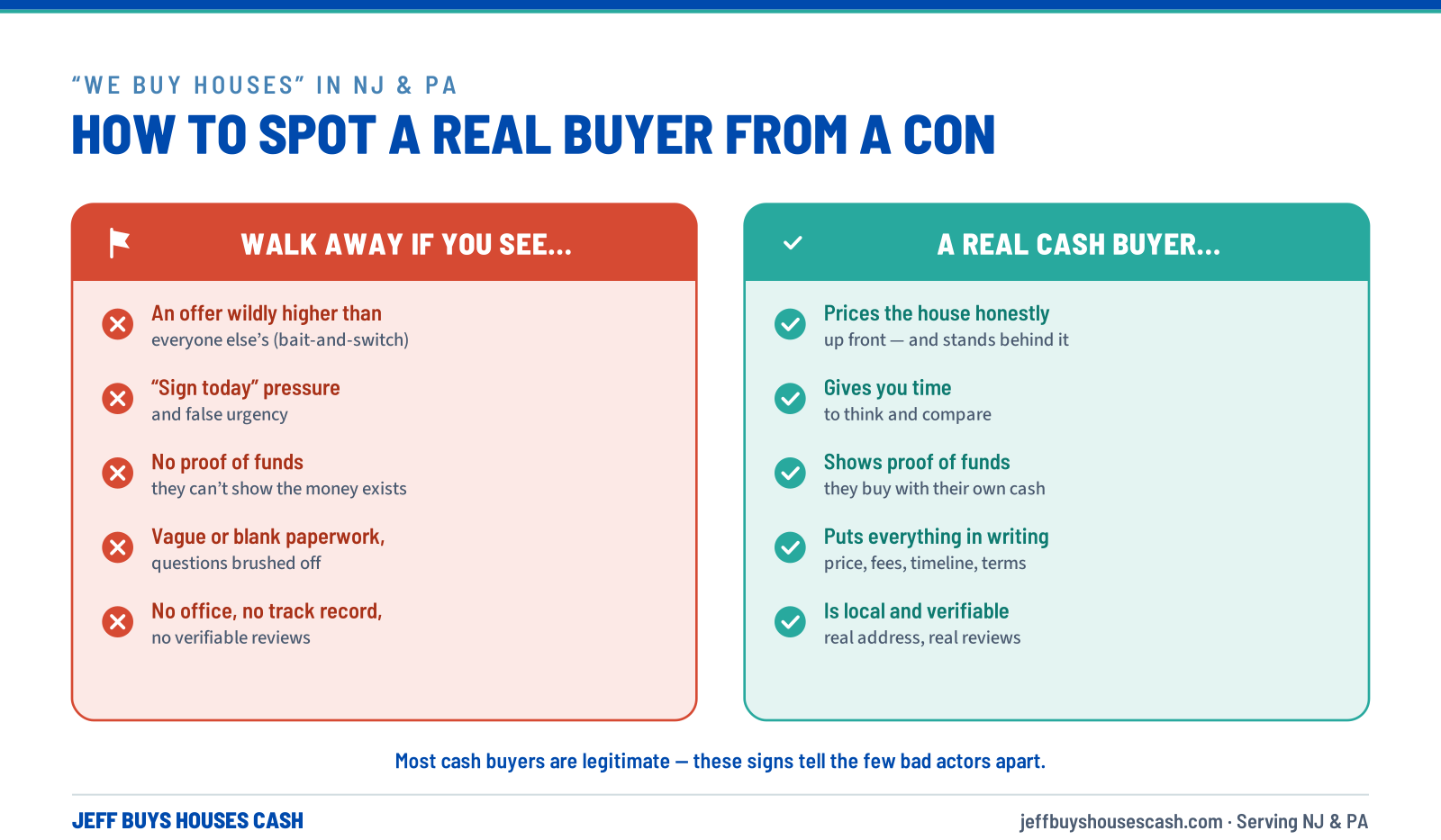
The bait-and-switch offer
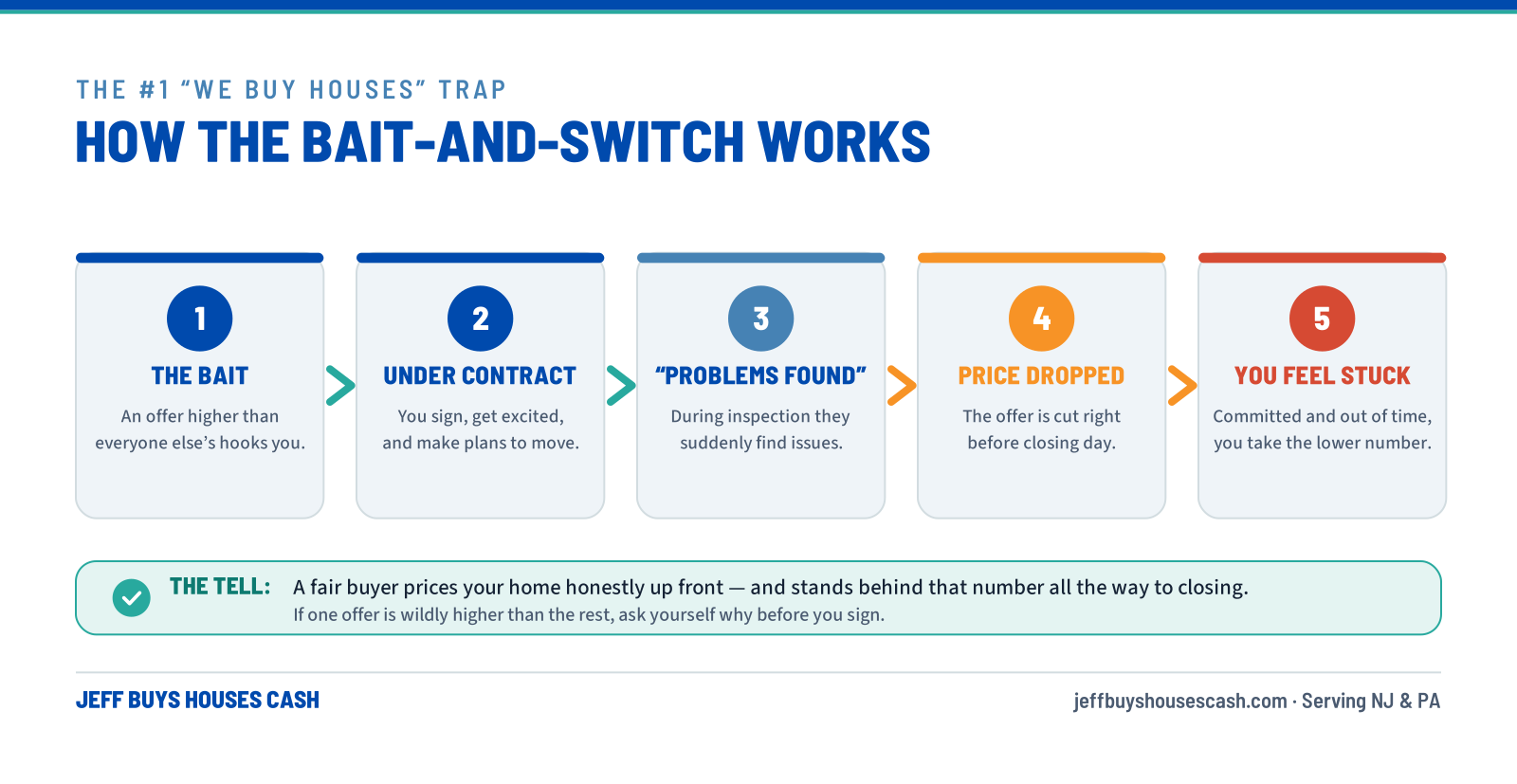
This is the big one, and it's not technically a "scam" — which is exactly why it works. A buyer gives you a number that's higher than everyone else's, gets you excited and under contract, and then "discovers problems" during their inspection period and drops the price right before closing. By then you've mentally moved on, maybe made plans, and you feel stuck. A fair buyer prices the house honestly up front and stands behind the number. If one offer is wildly higher than the others, ask yourself why.
Pressure and urgency
"This offer is only good today." "You need to sign right now." A real buyer knows this is one of the biggest decisions you'll make, and respects that you need time to think and compare. Pressure is a tool people use when they don't want you to look too closely.
No proof of funds
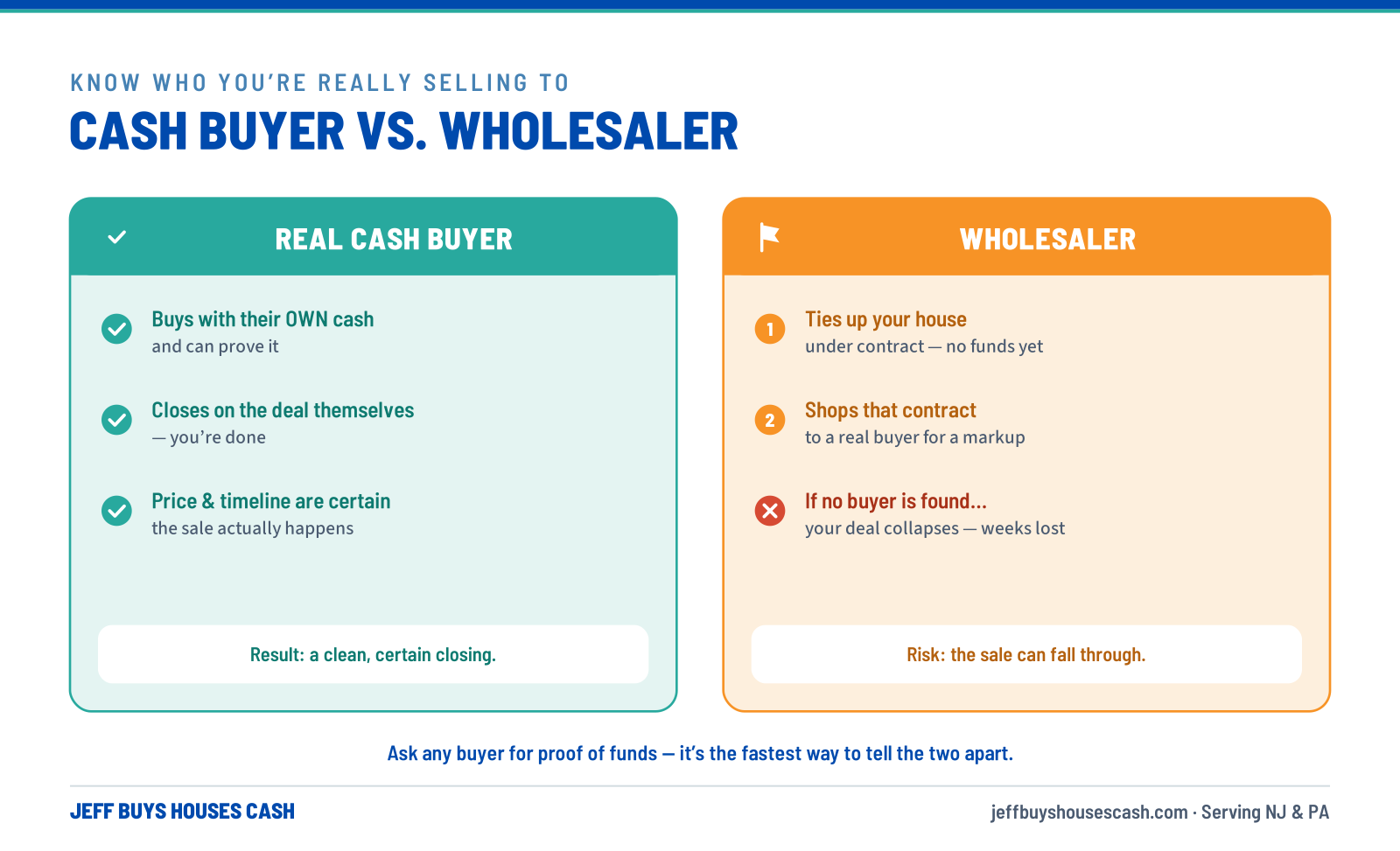
A genuine cash buyer can show you the money exists — a bank statement, a proof-of-funds letter, something. If someone can't prove they can actually close, there's a good chance they're a wholesaler planning to tie up your house under contract and then shop that contract to a real buyer for a markup. If they can't find one, your deal falls apart and you've lost weeks.
Vague or missing paperwork
Everything should be in writing: the price, who pays what, the timeline, and the contingencies. If a buyer waves off your questions or hands you a thin contract with blanks in it, stop. A detailed, written agreement protects you.
No real local presence
Be cautious with a buyer who has no physical office, no track record you can verify, and no reviews. The folks who are going to be around next year tend to have roots you can check.
How to protect yourself in ten minutes
You don't need to be an expert to screen a cash buyer. Here's the short version of the checklist I actually hand to sellers:
Research them. Look up online reviews, ratings, and testimonials. A pattern of real, specific reviews is hard to fake.
Verify they're legitimate and local. Properly set up to operate in your state, with a real address and a professional website.
Get more than one offer. Reach out to a couple of buyers and compare. Honest buyers welcome this — I tell people to do it.
Understand the process. Ask how they determine value, what fees (if any) they charge, and exactly how and when you'd close.
Don't rush. Read the contract. Understand it. Sleep on it if you want to.
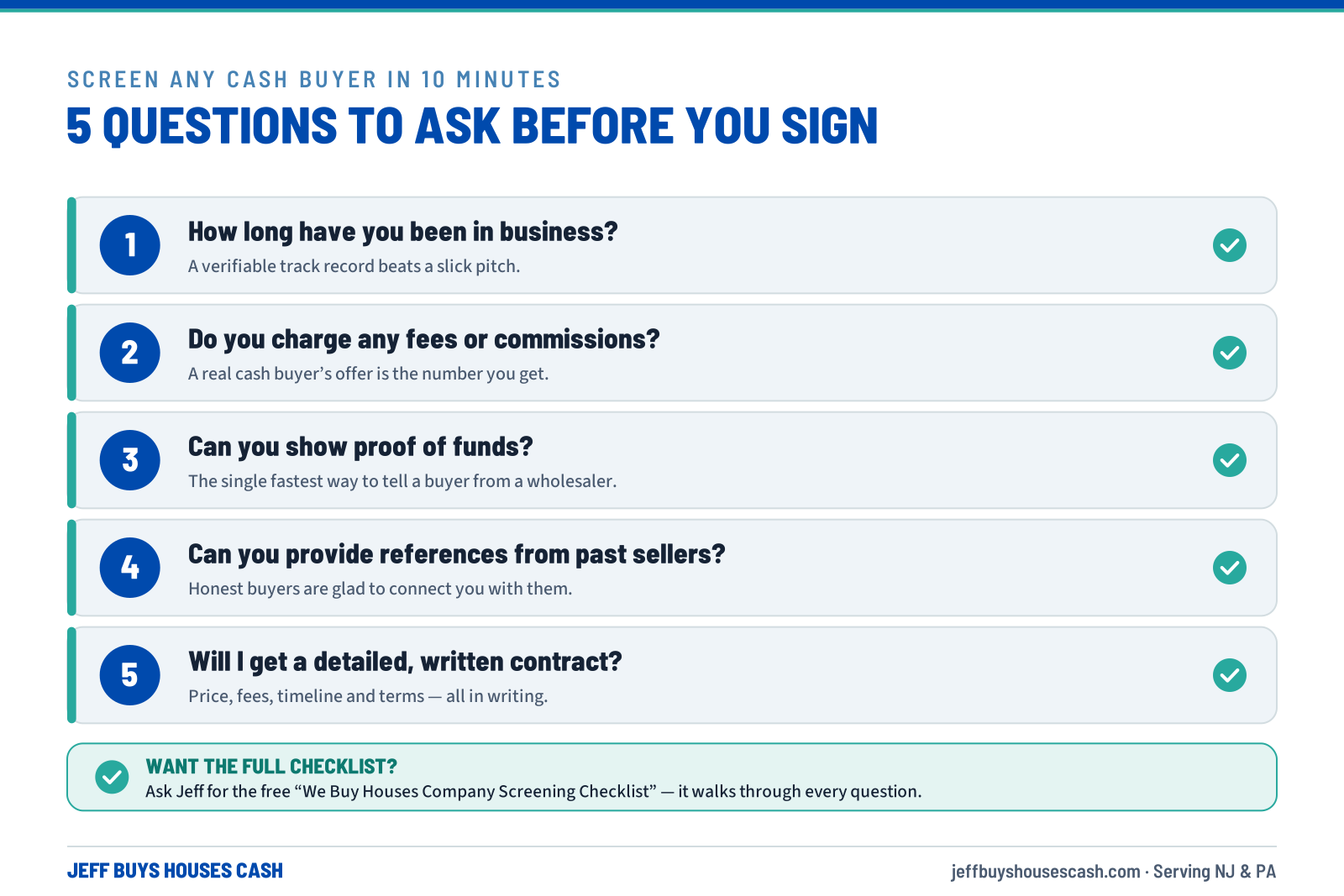
Five questions worth asking any buyer, straight out: How long have you been in business? Do you charge any fees or commissions? Can you show proof of funds? Can you provide references from past sellers? Will I get a detailed, written contract? The answers tell you almost everything.
(Want the full version? My free "We Buy Houses Company Screening Checklist" walks through it question by question — ask me and I'll send it.)
How I do it — and why I'm glad you're asking these questions
I'll tell you plainly how I work, because you should be able to hold every buyer to the same standard. I buy with my own cash, so I can show you proof of funds. I put the offer and terms in writing, and I explain exactly how I got the number — your home's value after repairs, minus what those repairs cost. There are no fees or commissions, and I pay the closing costs. I don't do pressure, and if I ever think listing with an agent would net you more, I'll tell you that too. (Here's how my cash process works, start to finish.)
I'd rather you vet me hard and feel sure than sign something you're uneasy about. Forty years in, my business runs on referrals and reputation — that only works if people walk away glad they called.
The bottom line
Don't let a few bad operators scare you off a path that might genuinely be your best option. Screen your buyer the way you'd screen a contractor for a big job: check them out, get more than one bid, read the paperwork, and trust your gut if something feels off. A real cash buyer will stand up to that scrutiny without blinking.
Have a buyer you're not sure about? Call or text me, Jeff, at (856) 281-1157 and I'll give you an honest read — even if you don't sell to me. Or get a straightforward cash offer here, no pressure and no obligation.
This article is general information to help you evaluate buyers, not legal advice. For contract questions, have a NJ real estate attorney review anything before you sign.